This is the second post on the contents of the Energy Summit held at the University of Missouri this week. The first post covered the keynote address by T. Boone Pickens, and that can now be seen, together with Chancellor Carney’s opening remarks, and those of Senators Bond and McCaskill as a video. (Warning it is a 1 hr 30 min video and some 219 MB). Mr. Pickens remarks were also picked up by the local Missourian. (The school of journalism was also holding briefings and interviews that ran concurrent with the summit). After the keynote, the Summit got underway with a brief review, by the chief research officers of the four campuses of the University of Missouri system, of the energy related research that each was carrying out. This was a fairly top level skim through a project range that covered fuel cells, hydrogen, a new way of storing gas on carbon bricks, and studies on a wide range of pathways to generate transportation fuels, and also prefaced a number of the papers, poster presentations and displays, the latter two of which were going on outside the main auditorium.
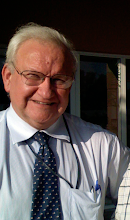
The first invited Speakers then came to the podium with Dale Klein, Chairman of the U.S. Nuclear Regulatory Commission leading off the presentations.
Mr Kein noted that his agency is a regulator, not an advocate, and that he is currently looking at 17 applications for 26 new nuclear plants, with another 3 applications for 5 plants being anticipated. (However this is likely to include the AmerenUE application for a second plant at their Fulton site. The company indefinitely suspended that request this morning, just after getting word that a bill that would allow it to charge for construction before it was finished was not going to happen).
Mr Klein walked us through the process of getting a permit, noting that it would take 30 months to review the application, 12 months to get public comment, and then it might take some 44 months to get the plant built. The current costs are in the range of $5 - $7 billion per plant, and they are licensed for 40 years initially, with a possible 20-year extension. (For comparison he noted that the USS Enterprise, the first nuclear powered aircraft carrier, was commissioned in 1960, and is coming to the end of its service life –within 3 – 5 years. He felt that the public needs more education on the benefits of nuclear power, and what not to be afraid of.
Coming next to the podium, Dr. Joan Woodard ( executive vice president at Sandia National Labs) mentioned her last visit to town, some 35 years ago as she drove out to Sandia to take up her first job there. She talked of nations climbing the energy ladder which takes nations from no power, through burning dung, and then to carbon fuels and to higher levels of consumption as society advances. However she noted that the US curve was flattening as is that of the European Union, and it is other nations, from Korea and Australia to China and India that are growing and seeing increased levels of energy demand as that growth continues. This is, in time, bound to strain the system, due to the demographics of a growing world population combined with growing standards of living, and thus individual energy demands.
She felt that Secretary Chu does a “wonderful job” in explaining the coming mandate that is Climate Change, and she noted the ever-shrinking condition of the Arctic ice cap. (Obviously she has not seen the latest ice data from the Arctic, which shows that the coverage is returning to the seasonal normal for the past 28 years, since she commented that the rate of shrinkage of the ice cap was accelerating, when, if you look at the plot, it obviously isn’t.) Nevertheless, in light of the mandate she felt that the energy enterprise must change to encompass not only the desire for economic prosperity (the ladder) and the regional environment, but also national security issues. In this she felt that while Global Trade can be good, it also creates tensions over such concerns as Russia, and now China buying up large quantities of the world reserves of a number of commodities. And in that regard we must consider that Chinese companies that are doing the purchasing are an extension of the state.
Droughts in Africa will drive migrations, leading to further conflict. Further the US is vulnerable to national disasters. Both of which threaten our security, although she then went on to mention more conventional threats. These include attacks by hackers into the control systems for our energy networks and the threats posed by global proliferation of nuclear knowledge. To protect against these threats we need a system that will, if it does fail, does so “gracefully” but which has high reliability and resilience against attack.
Daniel Cole senior vice president of Ameren then talked about his early job as a “pirate” down at Branson, MO. Here as part of the “tourist” entertainment he would regularly be pelted with bags filled with rock, but simulating gold. That job was excellent training for his current one with the utility. The company has 2.4 million electric customers, and a million natural gas customers. They produce some 16,600 MW which is nominally 61% coal, 30% natural gas fired. However because coal provides baseload and natural gas is for peaking demand supply, it turns out that 85% of actual production is coal-fired. It is also cheaper. But in the process last year, for example, it produced 70 million tons of carbon dioxide.
The nation produced some 6 billion tons. Now if the system goes to a cap and trade system and one might project growth to 6.2 billion tons generated in a couple of years, the cap might instead mandate total production is held to 5.5 billion tons. This amount would then be parceled out as a series of allocations. Each allocation would either be designated to a company at a price or subject to auction. The company could also offset some of its production with some alternate activity (such as paying for no-till farming for example).
They priced the cost that the company would face after the Lieberman Warner bill was proposed. It set a price of $50/allowance (1 ton of carbon) in 2015, rising to $100 by 2030. With the production of the company being 70 million tons, this will give an additional bill of $3.5 billion in 2015. This will mean, according to Mr Cole, the rapid disappearance of existing coal plants, but Missouri currently has the lowest electricity rates in the nation, and such a burden on their carbon production would have to be passed on as a very rapid increase in power costs per kWh to the customer to more than double that of today. The results when the requirements of the Waxman Markey bill were evaluated were even more severe.
Ameren is part of the Electric Power Research Institute (EPRI) which has examined different technologies (pdf) to see if, in fact, these targets are attainable, anticipating increases in efficiency of use, and a 0.1 to 0.7% growth in demand.
Their conclusion was that renewable sources will only act to stabilize carbon dioxide levels, and that while increased use of nuclear power can initiate a drop in levels, it will be a switch to advanced coal generation that will be required to make significant reductions. But to have a real impact the focus must look at coal, focus on adoption of new technology, and be international in application. But the answers will come as silver buckshot not as a silver bullet.
This is the third post on the Energy Summit
The second post covered the Keynote, and the first described the program.
The final speeches of the first day will be covered next.
Showing posts with label hydrogen. Show all posts
Showing posts with label hydrogen. Show all posts
Thursday, April 23, 2009


Monday, February 23, 2009
A Local Town Energy Meeting
Last Friday night I was a part of a panel at a local meeting on energy, put together by the local Democratic party. There were a number of us that had been asked to speak, and ahead of time, I had predicted that, with the meeting starting at 7 pm I would be home by 8:30 pm. The first surprise was that before the meeting started they had to bring in extra chairs. (I take no credit for this, I was a minor speaker). According to the local paper there were more than a hundred folk in the room, and one of the utility speakers noted that on this topic he usually sees about fifteen. The meeting was based on an initiative that passed in the last election that required utility companies to get 15% of their electricity from clean energy resources by 2021. It passed with 66% of the vote.
Missouri is one of the states that currently requires that a utility have a power plant in place and producing electricity before it can make any charge to the rate-payers. The practice of allowing a surcharge, while the plant is being built is called Construction Work in Progress (CWIP). It is controversial.
The benefits of this to those paying these bills is only there until the higher, later bills show up. Nevertheless with a construction time at around a decade, the first speaker, Erin Noble from the Missouri Coalition for the Environment spoke strongly about the need to keep the rule in place, while the nuclear power station at Fulton is doubled in capacity. She was answered later in the evening by the Ameren representative, who pointed out that money does not come free, and if the company has to carry that debt (and interest) until the charges can begin, then obviously they would be higher.
The second speaker, John Hensley, was from Wind Capital Group the company that had installed the wind turbines in Northwest Missouri. One of these, at Rockport was in an earlier Pick Points, because it is the first community that they feel can meet all its needs from the turbines. (Their web site has a wind speed indicator that shows the wind is currently blowing at 10 mph as I write). He gave a little of the history of the company and some of the benefits of the installations to the local community. He also showed slides of the rather impressive foundation that has to be installed to hold one of the turbines. To date it has been a success, but, for this state, all the potential sites with enough wind to be useful are up in the Rockport area. The company was able to tie into existing distribution lines to use the power it generated, but getting much power further into the state will require that new power lines be run, and there are a number of different forms of cost and delay in getting that accomplished. He did note the potential of the stimulus package to help.
Our group, from the University tried to cover a number of the different programs that we are currently working on, with Angie Rolufs, Director of the Institute for Environmental Excellence, giving the campus overview of projects. These range from the more mundane (but effective) step of having the campus do an energy audit (which it has) through a number of current programs that include improving grid connections to intermittent sources of power (wind and solar) to vehicles powered by various unconventional means. The next topic, covered by Curt Elmore, related to our ongoing study of wind and solar power, and the way to integrate it into the grid. He it was who had to explain to folk that, even though we have a small turbine installed, the low and intermittent quality of the wind in this part of the state would not make wind an economic viability - it will take about 40-years for the one installed to pay for itself. Then I talked a bit on our current algae program, and John Sheffield finished out to group talk with some words on the Hydrogen project and the current work on the EcoCar Challenge.
There were two representatives from AmerenUE, the generator of electricity for this part of the state, who began by discussing the funding of Callaway, during which they acknowledged that the increasing prices of natural gas generators would limit their future potential as a power source. They moved on to discuss their current initiative to improve household efficiency in the use of electricity and the willingness to do energy audits of homes, and what typical results might be. They referred to the latest National Geographic, which features an Energy Audit article. (I described one that I was familiar with in an earlier post. The need for improving energy use was also stressed by the local utility that provides power to the surrounding area, Intercounty Electric and the opportunity for a free home energy audit was explained.
There were a number of questions throughout the evening, and at the end (somewhere around 10 pm) most of the folk were still in the room, asking questions and debating. Energy is obviously an issue that has us rural folk’s attention.
.
Missouri is one of the states that currently requires that a utility have a power plant in place and producing electricity before it can make any charge to the rate-payers. The practice of allowing a surcharge, while the plant is being built is called Construction Work in Progress (CWIP). It is controversial.
The benefits of this to those paying these bills is only there until the higher, later bills show up. Nevertheless with a construction time at around a decade, the first speaker, Erin Noble from the Missouri Coalition for the Environment spoke strongly about the need to keep the rule in place, while the nuclear power station at Fulton is doubled in capacity. She was answered later in the evening by the Ameren representative, who pointed out that money does not come free, and if the company has to carry that debt (and interest) until the charges can begin, then obviously they would be higher.
The second speaker, John Hensley, was from Wind Capital Group the company that had installed the wind turbines in Northwest Missouri. One of these, at Rockport was in an earlier Pick Points, because it is the first community that they feel can meet all its needs from the turbines. (Their web site has a wind speed indicator that shows the wind is currently blowing at 10 mph as I write). He gave a little of the history of the company and some of the benefits of the installations to the local community. He also showed slides of the rather impressive foundation that has to be installed to hold one of the turbines. To date it has been a success, but, for this state, all the potential sites with enough wind to be useful are up in the Rockport area. The company was able to tie into existing distribution lines to use the power it generated, but getting much power further into the state will require that new power lines be run, and there are a number of different forms of cost and delay in getting that accomplished. He did note the potential of the stimulus package to help.
Our group, from the University tried to cover a number of the different programs that we are currently working on, with Angie Rolufs, Director of the Institute for Environmental Excellence, giving the campus overview of projects. These range from the more mundane (but effective) step of having the campus do an energy audit (which it has) through a number of current programs that include improving grid connections to intermittent sources of power (wind and solar) to vehicles powered by various unconventional means. The next topic, covered by Curt Elmore, related to our ongoing study of wind and solar power, and the way to integrate it into the grid. He it was who had to explain to folk that, even though we have a small turbine installed, the low and intermittent quality of the wind in this part of the state would not make wind an economic viability - it will take about 40-years for the one installed to pay for itself. Then I talked a bit on our current algae program, and John Sheffield finished out to group talk with some words on the Hydrogen project and the current work on the EcoCar Challenge.
There were two representatives from AmerenUE, the generator of electricity for this part of the state, who began by discussing the funding of Callaway, during which they acknowledged that the increasing prices of natural gas generators would limit their future potential as a power source. They moved on to discuss their current initiative to improve household efficiency in the use of electricity and the willingness to do energy audits of homes, and what typical results might be. They referred to the latest National Geographic, which features an Energy Audit article. (I described one that I was familiar with in an earlier post. The need for improving energy use was also stressed by the local utility that provides power to the surrounding area, Intercounty Electric and the opportunity for a free home energy audit was explained.
There were a number of questions throughout the evening, and at the end (somewhere around 10 pm) most of the folk were still in the room, asking questions and debating. Energy is obviously an issue that has us rural folk’s attention.
.
Read more!
Subscribe to:
Posts (Atom)

 Posts
Posts